The Architect’s Guide to the Ledge Edge: Redefining the 2cm Porcelain Profile
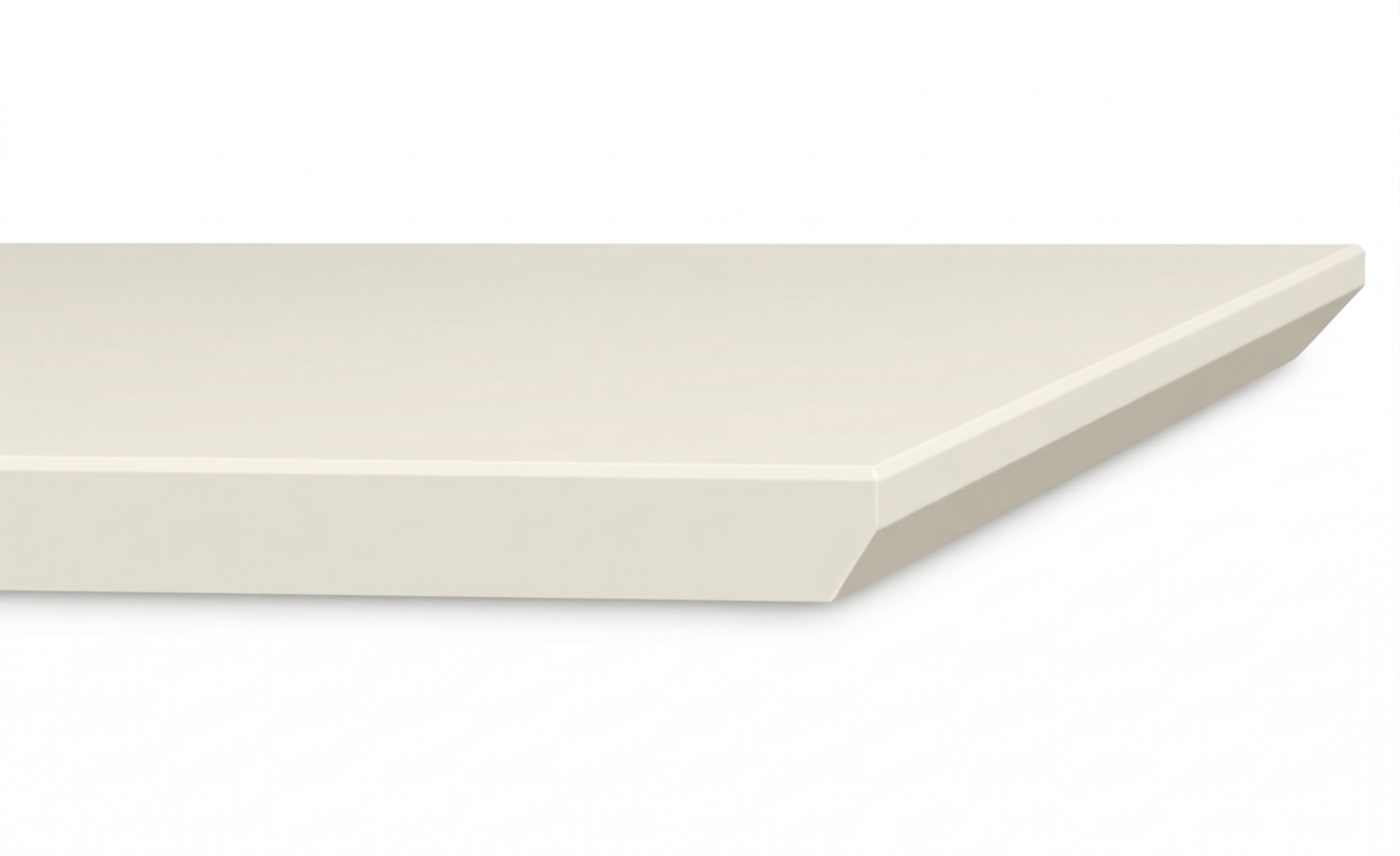
2cm porcelain slab section featuring a Ledge Edge (also known as a Reverse Bevel or Platter Edge).
In the world of high-end surfacing, the difference between a standard renovation and a true architectural masterpiece lives in the last 2 centimeters.
As a specialist in mineral surfaces, I’ve seen the global design shift toward quiet luxury. This movement has moved us away from the bulky, heavy edges of the past toward the refined, high-density strength of 2cm porcelain slabs. To truly master this aesthetic, one profile stands above the rest: The Ledge Edge.
What is a Ledge Edge (Reverse Bevel)?
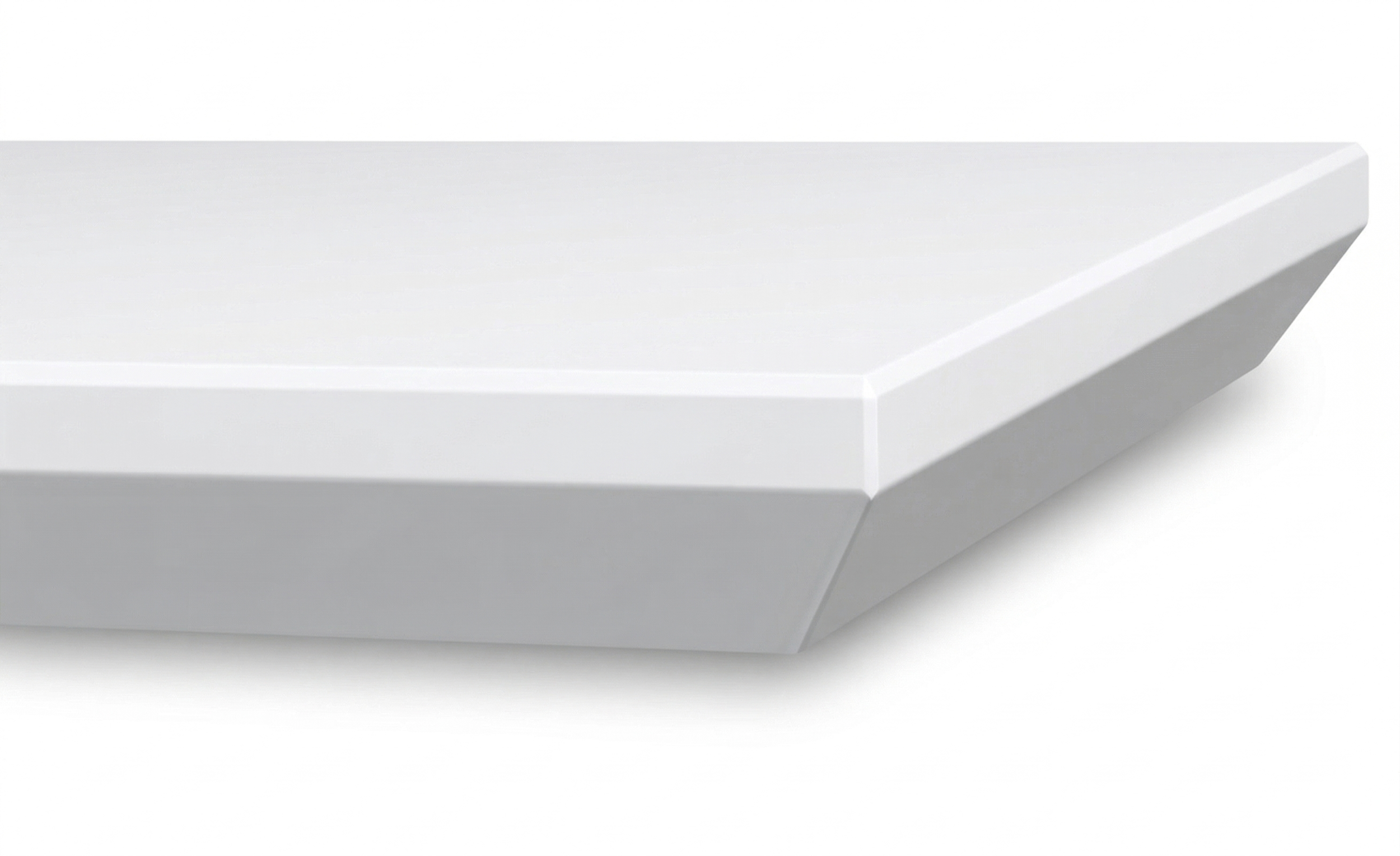
Ledge Edge (also known as a Reverse Bevel or Platter Edge).
The Ledge Edge, frequently referred to by top-tier fabricators as the Reverse Bevel or Platter Edge is a technical profile where the vertical face of the countertop tapers inward toward the cabinetry at a precise angle.
Unlike a standard Double Bevel Edge, which clips both the top and bottom corners for a symmetrical framed look, the Reverse Bevel "tucks" the mass of the slab away from the viewer. This creates a sharp, leading line on the top surface, followed by a dramatic recession that creates a "floating" effect.
Ledge Edge vs. Reversed Demi Bullnose: The Visual Distinction
Many homeowners ask me: "Don't all tapered edges create a floating effect?" While both profiles tuck the edge away, the visual "language" is completely different:
The Ledge Edge (Geometric Precision): Uses a straight, angular cut (typically 45 or 60 degrees. It creates a high-contrast, sharp shadow line. If your home features clean lines and minimalist fixtures, this is your profile.
The Reversed Demi Bullnose (Organic Softness): Instead of a sharp angle, this uses a smooth radius curve that rolls back under the stone. It creates a soft, fading shadow—perfect for "Biophilic" or transitional designs.
Engineering the Perfect "Float" for 2cm Porcelain
At Lais Luz, we specialize in the precision required for these advanced profiles.
However, the Ledge Edge isn't the only way to handle a 2cm slab:
For a "Solid Block" look: We often recommend a Mitered Edge, which allows a thin slab to mimic the massive appearance of a 4-inch stone block.
For high-traffic durability: If you have a busy family kitchen, a classic Eased Edge provides a clean 90-degree look that is slightly softened to prevent chipping.
For a timeless aesthetic: In more traditional spaces, a Half Bullnose or Full Bullnose Edge offers a rounded, soft finish that highlights the stone's thickness through continuous light reflection.
Why the Ledge Edge is the Choice for 2026
Choosing a Platter Edge is an intentional design choice. It reduces the "visual weight" of your island, making the countertop feel like a suspended architectural plane rather than a heavy piece of masonry.
The Lais Luz Signature
Whether you are looking for the sharp precision of a Sharknose or the subtle recession of a Ledge Edge, your choice of profile defines the soul of your kitchen. Don't settle for "standard" when you can have a custom edge that transforms your 2cm porcelain into a work of art.
Quick Comparison: Which Edge is Your Style?
| Profile | Best For... | Visual Vibe |
|---|---|---|
| Ledge / Reverse Bevel | Modern Minimalism | Sharp, Architectural, Floating |
| Mitered Edge | Luxury Statements | Bold, Thick, Seamless |
| Sharknose Edge | Ultra-Slim Tech | Sleek, Inward-Tapered |
| Eased Edge | Daily Durability | Clean, Standard, Safe |
See the Design in Action
Choosing the right edge profile is about more than just a name—it’s about how the light hits the surface and how the stone integrates with your space.
Frequently Asked Questions: Ledge Edge
Understanding the technical details of your countertop profile is the first step toward a custom, designer-led kitchen. Here are the most common questions we receive about the Ledge Edge and how it compares to other modern finishes.
1. What is a Ledge Edge countertop?
A Ledge Edge, frequently called a Reverse Bevel or Platter Edge by specialized fabricators, is a contemporary countertop profile where the bottom of the edge tapers inward toward the cabinetry at a distinct, geometric angle ((typically 45 or 60 degrees). This creates a clean leading line on the top surface while generating a deep shadow underneath, resulting in a high-end "floating" aesthetic, especially on 2cm porcelain slabs.
2. Is a Ledge Edge the same as a Reverse Bevel or a Platter Edge?
Yes, they are the same type of profile. These terms describe an inward-sloping finish, as opposed to a standard bevel, which slopes outward. This is a crucial distinction for achieving minimalist, modern design.
3. What is the difference between a Ledge Edge and a Reversed Demi Bullnose?
While both profiles recede under the countertop to create a lighter look, the difference is geometric. The Ledge Edge is defined by a crisp, straight-line angle. The Reversed Demi Bullnose is defined by a soft, radius curve. The Ledge Edge creates a sharper shadow, perfect for minimalist, contemporary spaces.
4. Why is the Ledge Edge ideal for 2cm porcelain countertops?
2cm porcelain is incredibly dense and durable, allowing fabricators to create a much sharper, "knife-edge" Ledge profile than is possible with natural stone. The profile accentuates the inherent slimness of porcelain, creating a sophisticated "Italian-design" aesthetic.