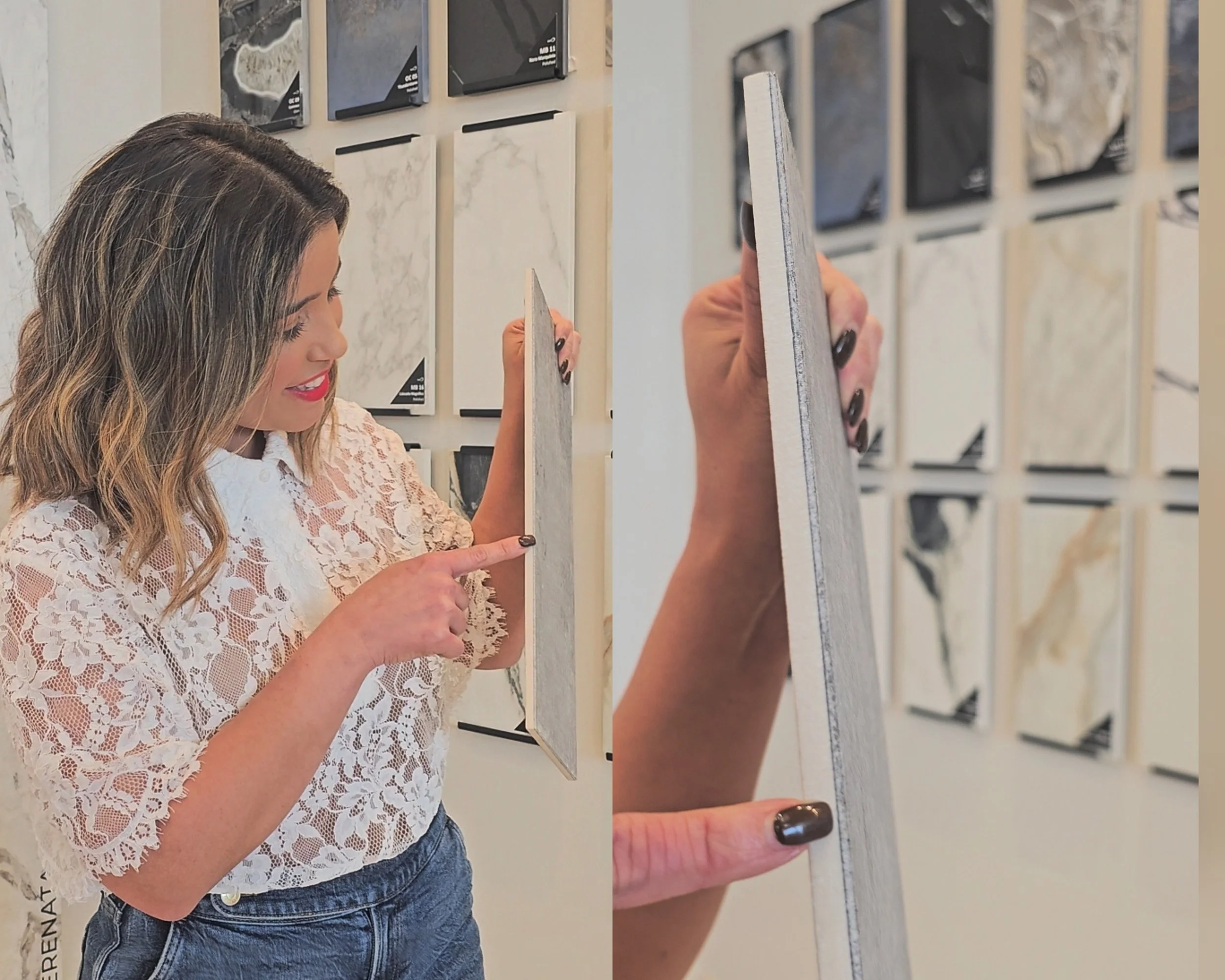
Why Architects Love Porcelain Door Cladding
Quick Summary for Architects:
Material: 4mm porcelain is ideal for weight management.
Benefit: Zero-porosity makes doors easy to clean and mold-resistant.
Design: Hidden doors create visual continuity in minimalist interiors.
Hardware: Requires concealed hinges and specialized substrates.
XStone Calacatta Antico Striped - Nature Finish
Have you ever walked down a beautiful hallway and wondered where the rooms were? That "magic" is the work of a hidden door (also called an invisible or flush door).
Today, top architects aren't just using paint to hide doors—they are using ultra-thin porcelain slabs. It’s the ultimate way to make a door disappear into a wall while adding a "wow" factor to your home.
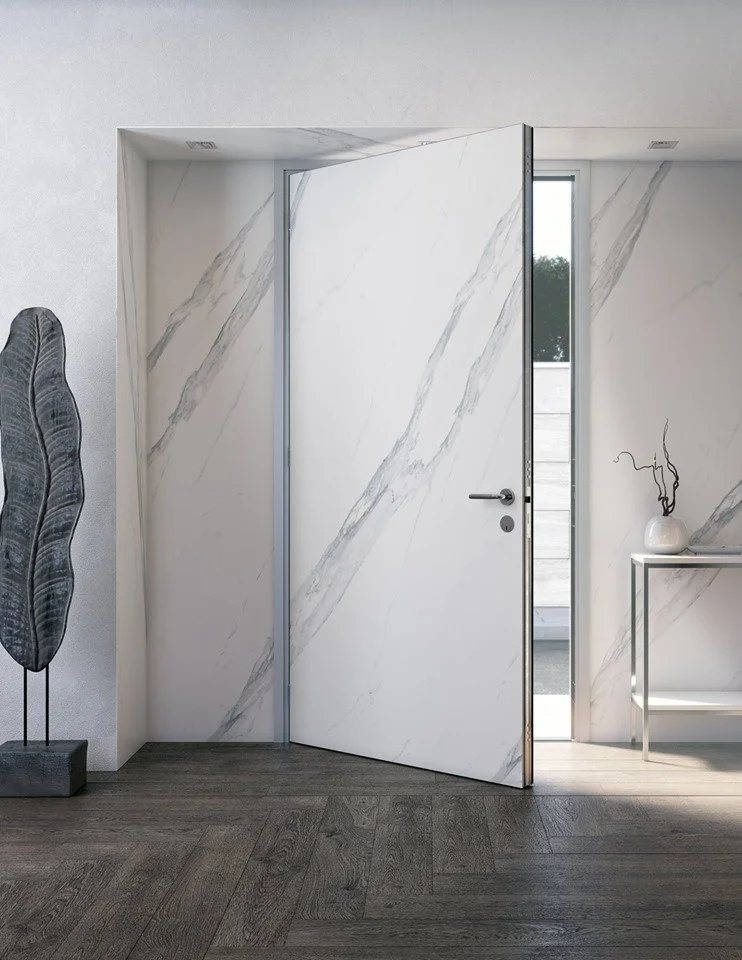
Why Use Porcelain for Door Cladding?
You might wonder: “Why not just use wood or wallpaper?” While those work, ultra-thin mineral surfaces (like 4mm and 6mm porcelain) are in a different league for three big reasons:
It’s Lightweight: 4mm and 6mm porcelain is thin enough that it won't break your door hinges, but strong enough to last a lifetime.
Zero Maintenance: Unlike wood, porcelain doesn't warp or scratch. If you have kids or pets, your "invisible door" stays invisible and clean.
The Seamless Look: You can "vein-match" the slabs. This means the pattern in the stone continues perfectly from the wall onto the door.
Want to master slab layout patterns? Learn the Differences in Vein-Matching
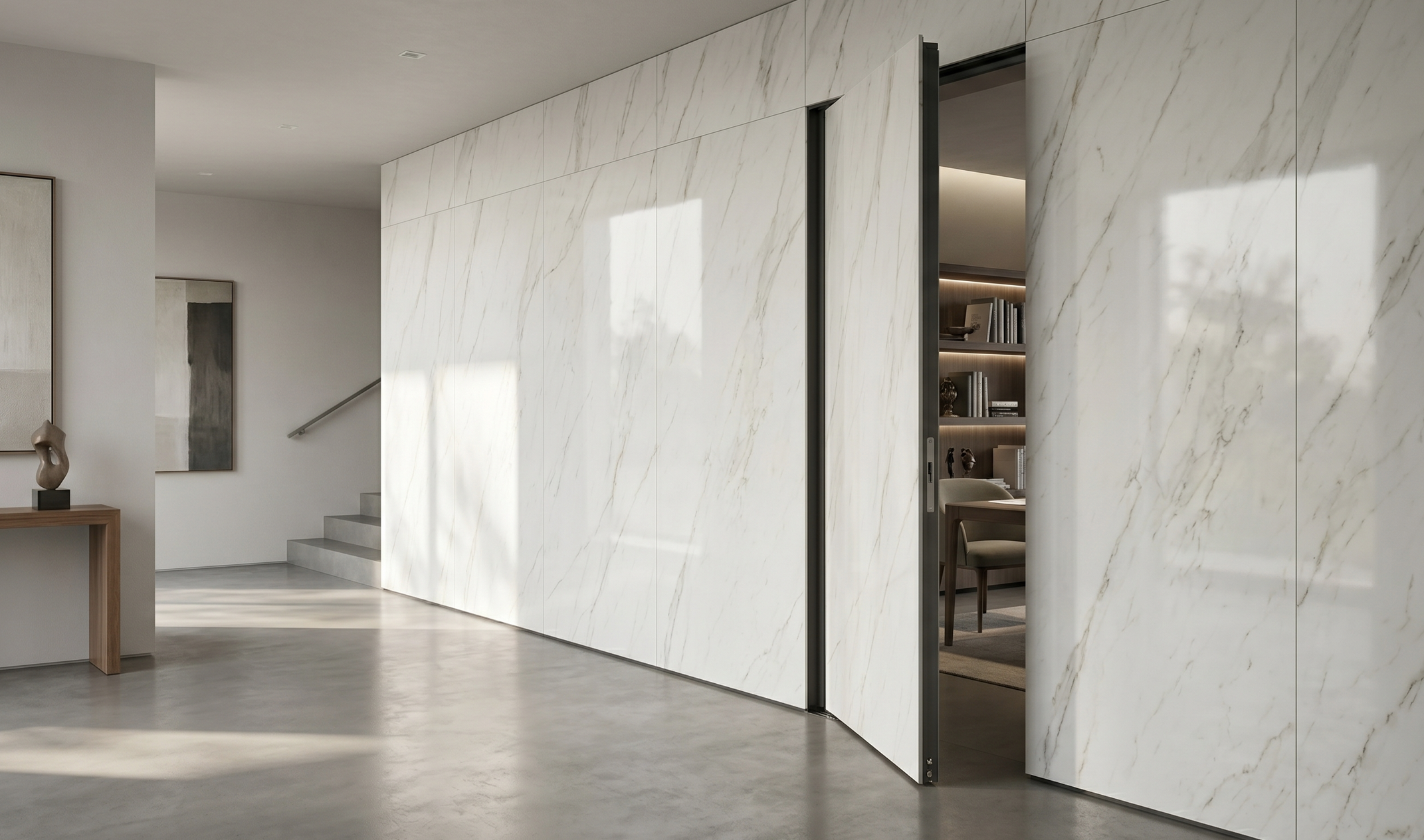
3 Creative Hidden Door Ideas for Your Home
1. The "Secret" Kitchen Pantry
Want a clean kitchen? Hide your walk-in pantry. By cladding the pantry door in the same Dekton or porcelain as your backsplash or kitchen wall, you create a sleek, monolithic look.
2. The Invisible Home Office
If you work from home, you want to separate work from life. A hidden door in an accent wall allows your office to vanish when the workday is over, leaving you with a stunning, continuous stone feature wall.
3. The Master Suite Pivot
Large-format pivot doors are massive and impressive. When clad in porcelain, they feel like a rotating piece of art rather than just an entrance.
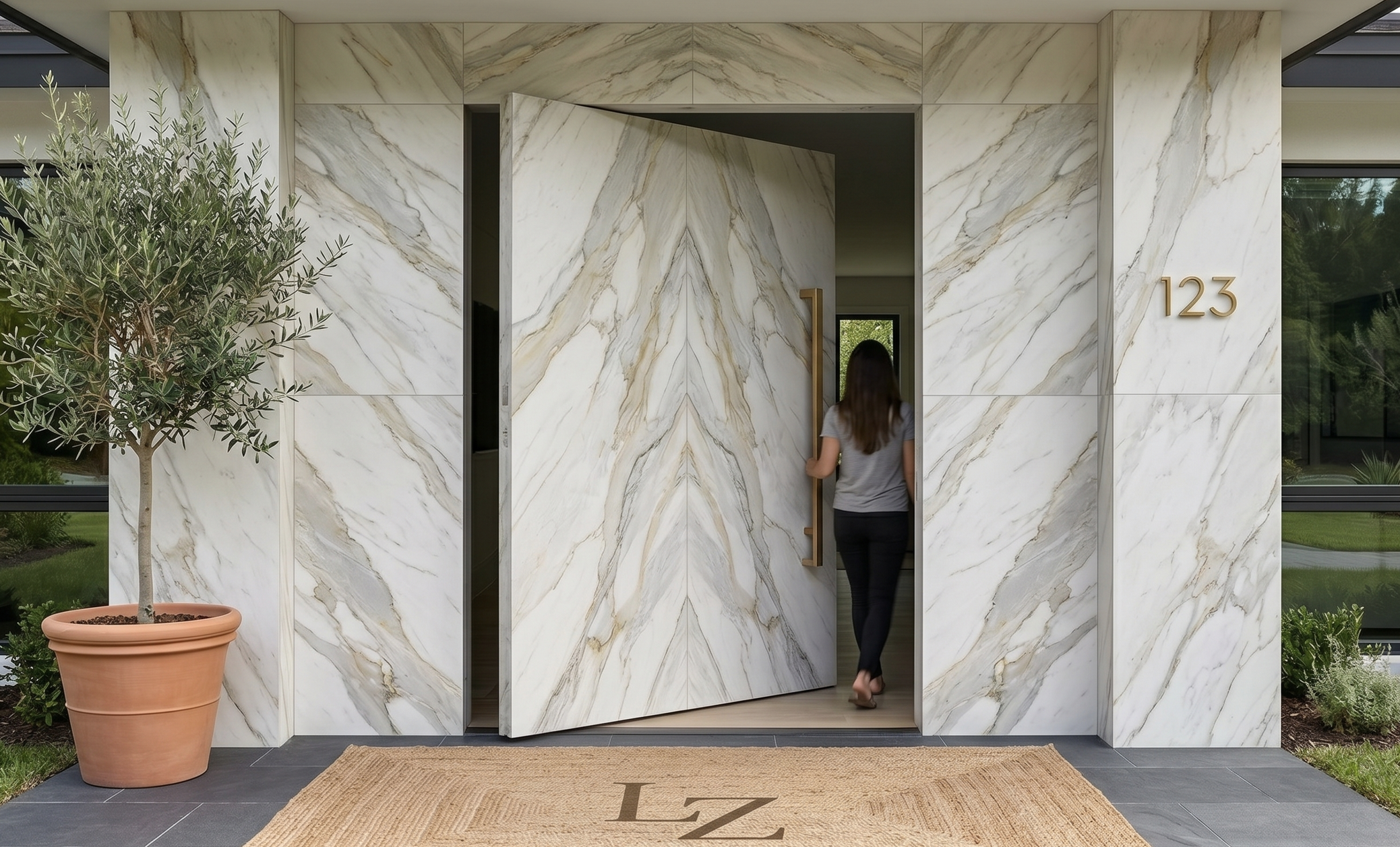
The Technical Details: Making the Entrance Invisible
In my experience, the "invisible" effect isn't just about the material—it’s about the engineering behind the door. To get a result that feels like a natural part of the architecture, we focus on two key areas:
Integrated Hardware: Using concealed hinges and "touch-to-open" systems allows us to remove handles and visible frames. When the hardware is tucked away, the eye only sees the beauty of the surface.
Precision Edge Detailing: Depending on the design, we choose an edge profile that ensures the transition between the door and the wall is nearly microscopic. While a mitered edge creates a stunning wrap-around stone look, many minimalist designs utilize a polished straight edge with ultra-thin 4mm or 6mm slabs to keep the lines incredibly sharp and clean.
Curious about which edge style fits your design? Explore Our Edge Profiles Guide

Is Porcelain Door Cladding Right for Your Project?
If you are aiming for a minimalist, "gallery-style" interior, this is the gold standard. It’s the perfect marriage of a high-end design trend and the most durable surface material available today. Whether it’s hiding a pantry or creating a seamless master suite entrance, the results are always breathtaking.
Let’s Build Your Masterpiece. Every hidden-door project is unique, requiring a custom approach to fabrication and substrate support. At Lais Luz, we specialize in the high-level technical work required to make these seamless transitions a reality.
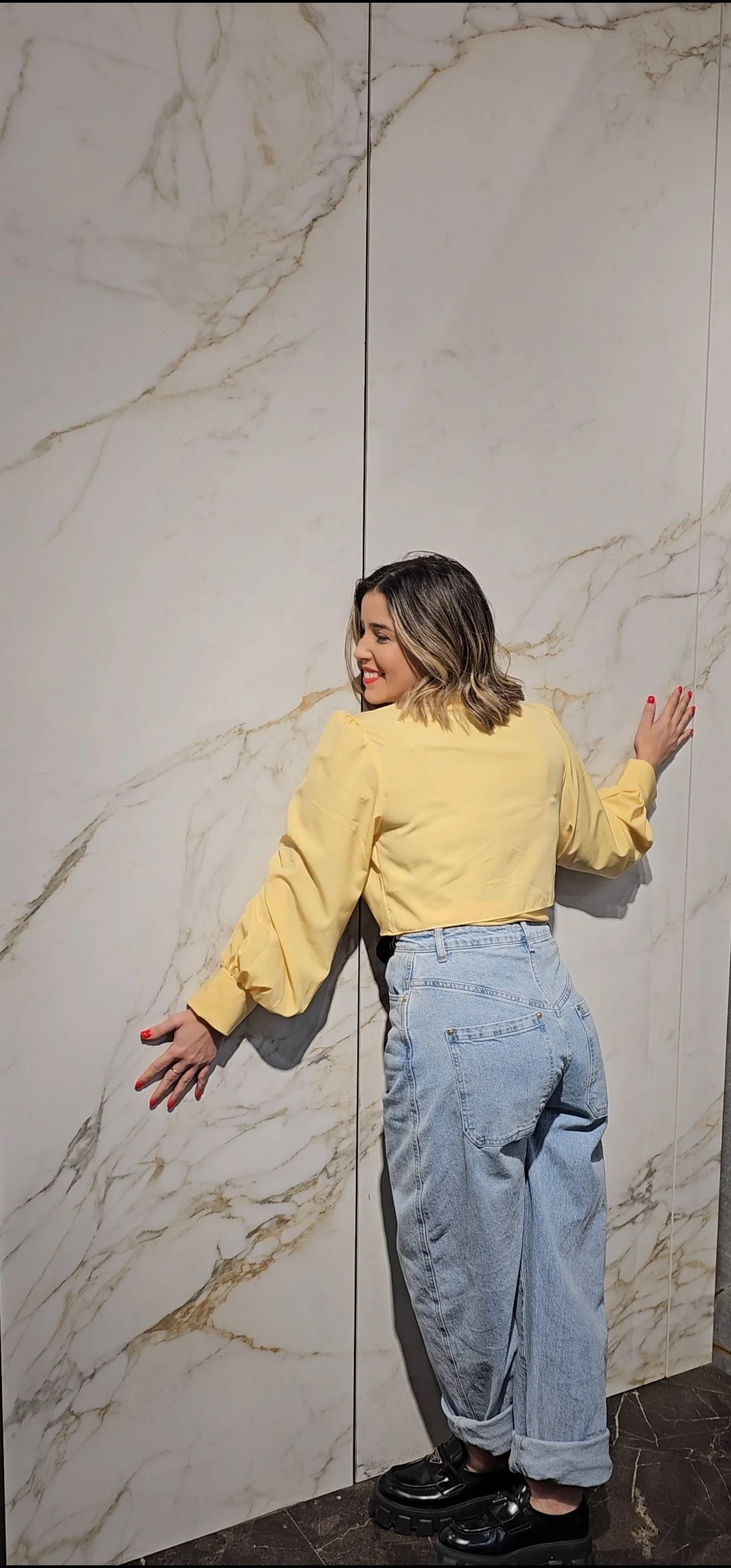
Want to see it in motion? Come along with me as I show you the details of this seamless porcelain slab door cladding.
Read More: