The Shark Nose Edge Countertop: Light and Mass
The modern luxury interior demands visual weightlessness.
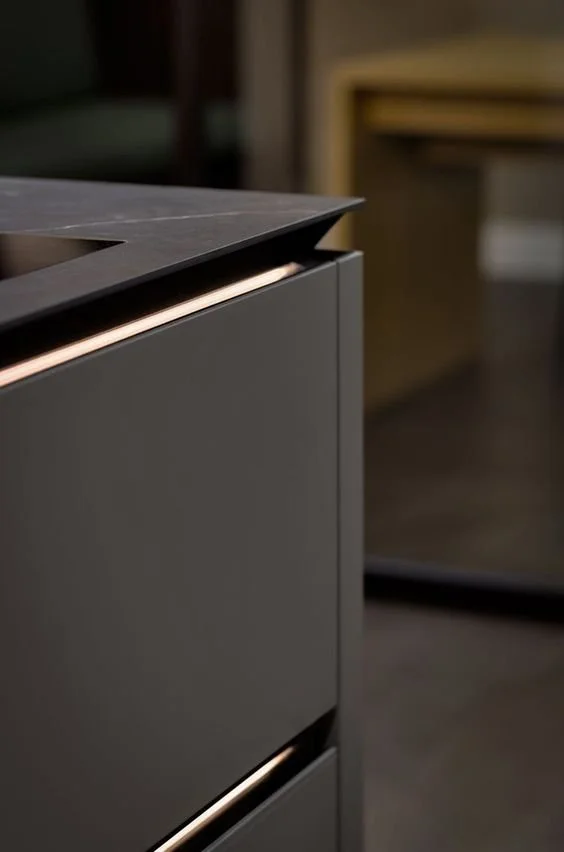
Standard profiles add vertical bulk to an island or vanity. The shark nose edge completely flips this dynamic by using simple geometric lines.
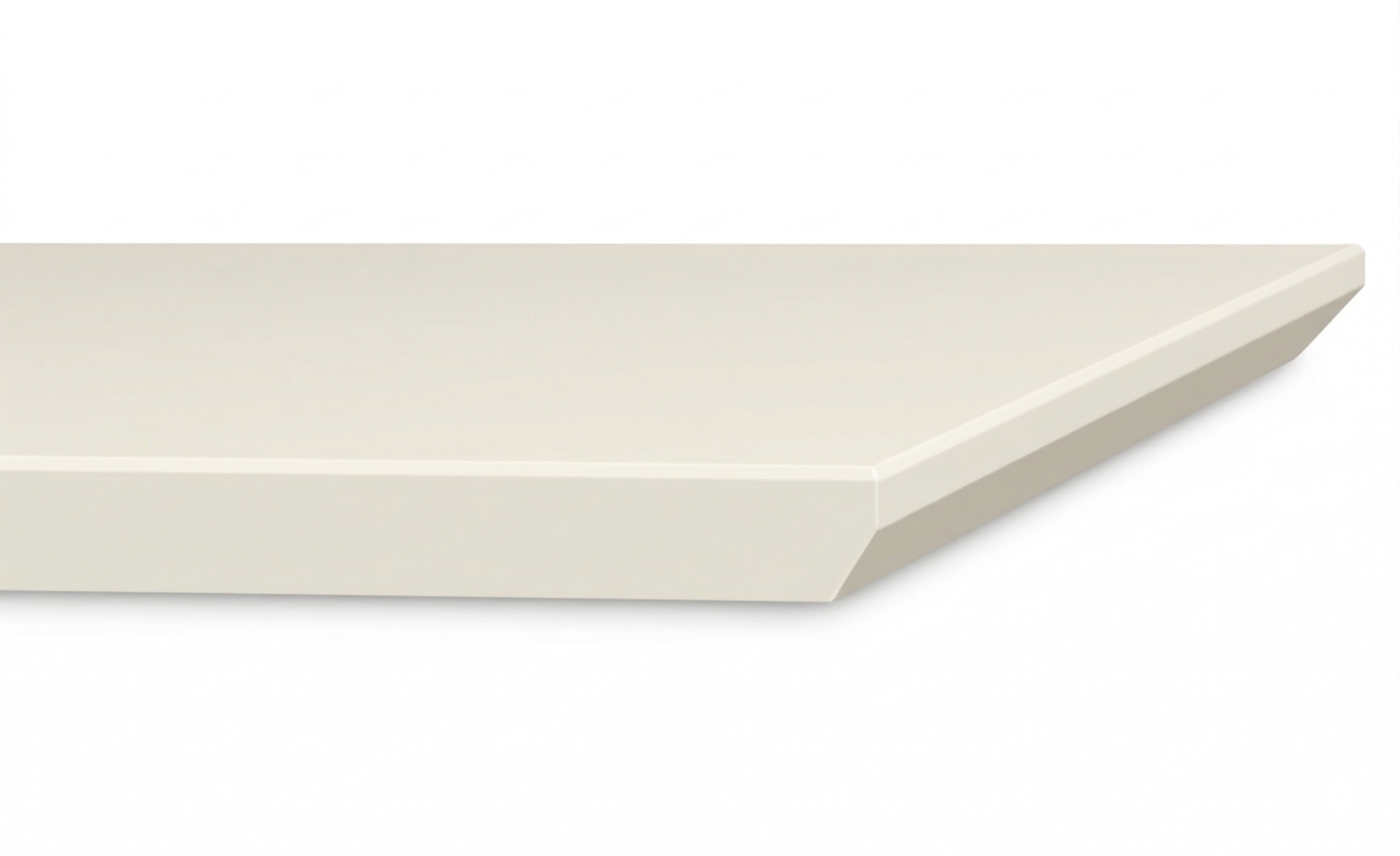
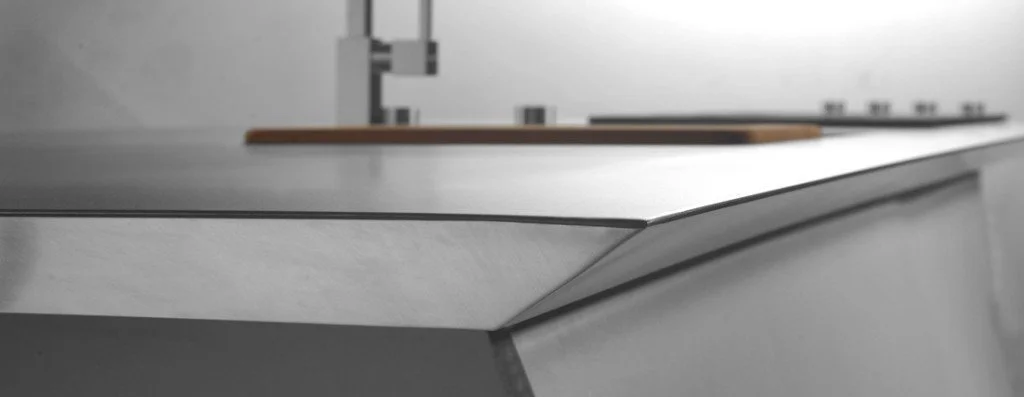
By tapering the material backward underneath the top surface, it creates a crisp, architectural shadow line.
The result is a surface that appears to hover seamlessly above its base.
The 360° Perspective
The Technical Angle: The profile cuts a 45-degree reverse bevel under the top face, leaving a refined, eased perimeter that requires precise calibration to prevent edge chipping.
The Aesthetic Angle: It creates a razor-thin profile on the vertical plane while keeping the full thickness of the horizontal working plane.
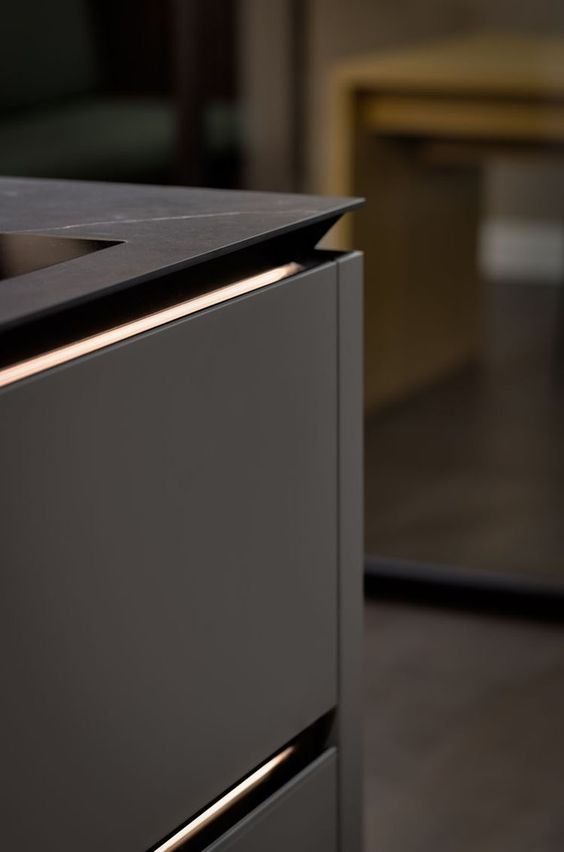
The Practical Angle: The deep under-bevel functions as an ergonomic finger pull for handle-free cabinetry, keeping the final hardware entirely concealed.
The Material Balance: Dekton and Porcelain Slab
Engineered, innovative surfaces, specifically large-format porcelain slabs and ultracompact materials like Dekton, bring a different strategic solution to this exact detail. Long specified in high-end European architecture for durability, this material class offers immense structural strength and zero porosity.
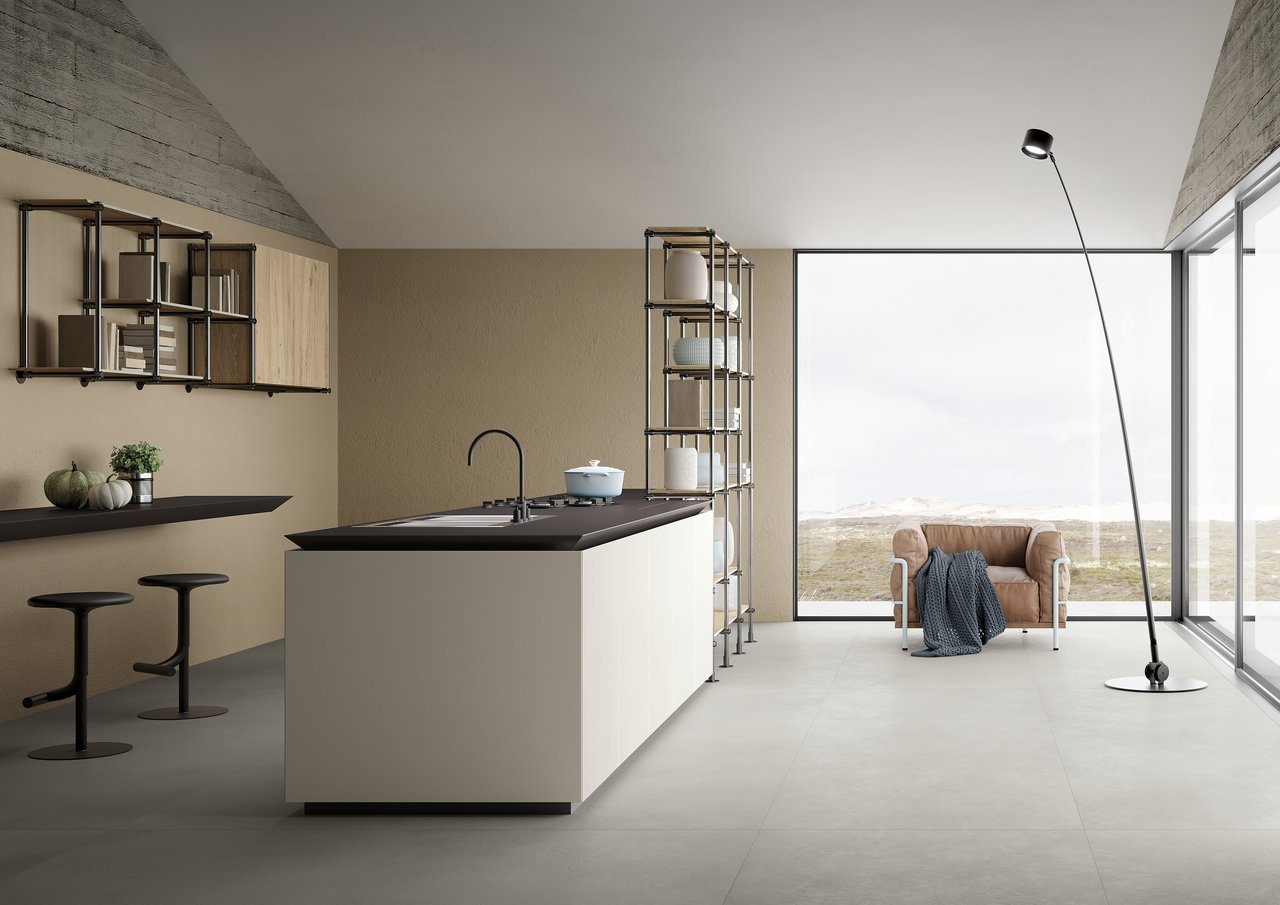
To successfully deploy this profile across a project, it must be evaluated alongside alternative fabrication techniques. You can review our comprehensive breakdown of standard porcelain countertop edge profiles to see how the shark nose contrasts with geometric mitering.
While a shark nose emphasizes weightlessness through an undercut shadow line, a continuous waterfall vs mitered edge profile drops mass vertically to the floor plane to ground an island. For projects requiring a clean look without a reverse undercut, evaluating an eased edge slim profile countertop offers an elegant alternative that honors the native thickness of the slab.
Beyond Countertops: Furniture and Cabinet Cladding Applications
The shark nose edge is not exclusive to kitchen countertops.
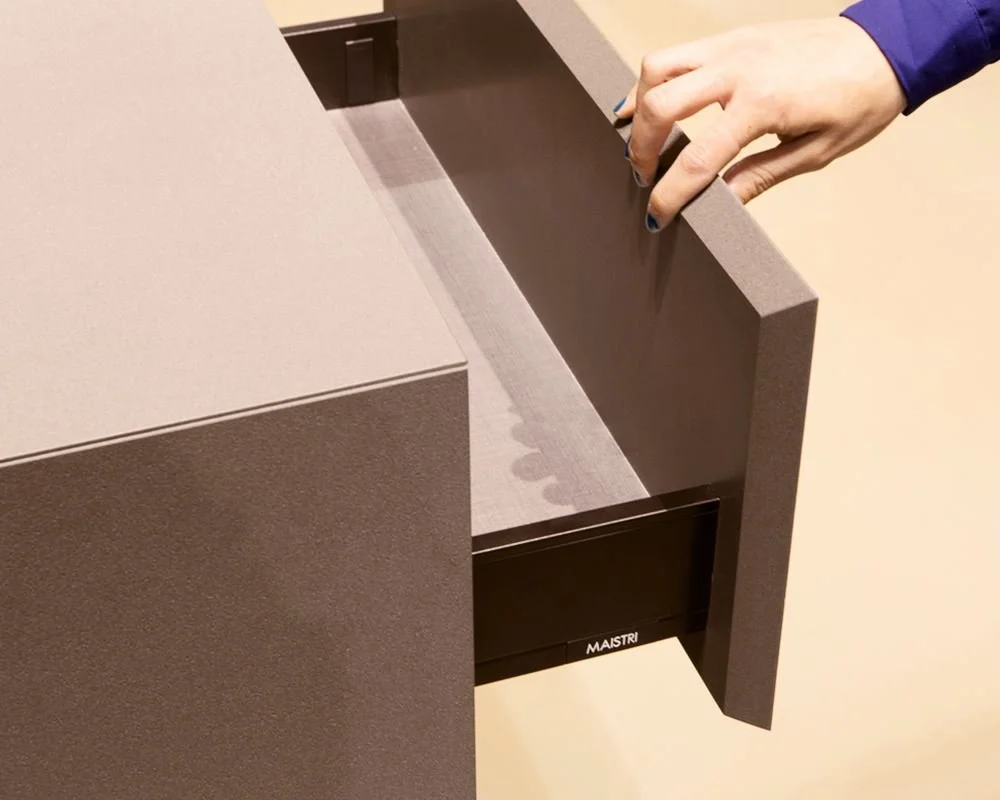
In contemporary European design, this profile is highly utilized in premium furniture design, particularly for dining tables and executive desks. The reverse bevel reduces the visual weight of large tables, giving heavy stone or porcelain tops a slim, floating aesthetic.
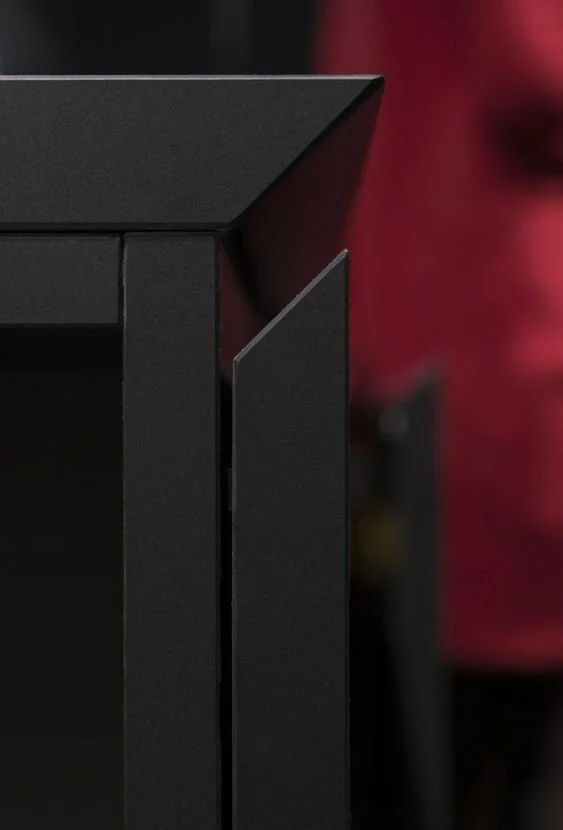
Beyond furniture, the profile serves a critical structural purpose in integrated cabinetry. When applying thin material (Like Dekton) for cabinet cladding, the shark nose cut forms a built-in recessed channel. This allows fingers to easily grip and open doors from behind, completely eliminating the need for external handles or push-to-open mechanisms.
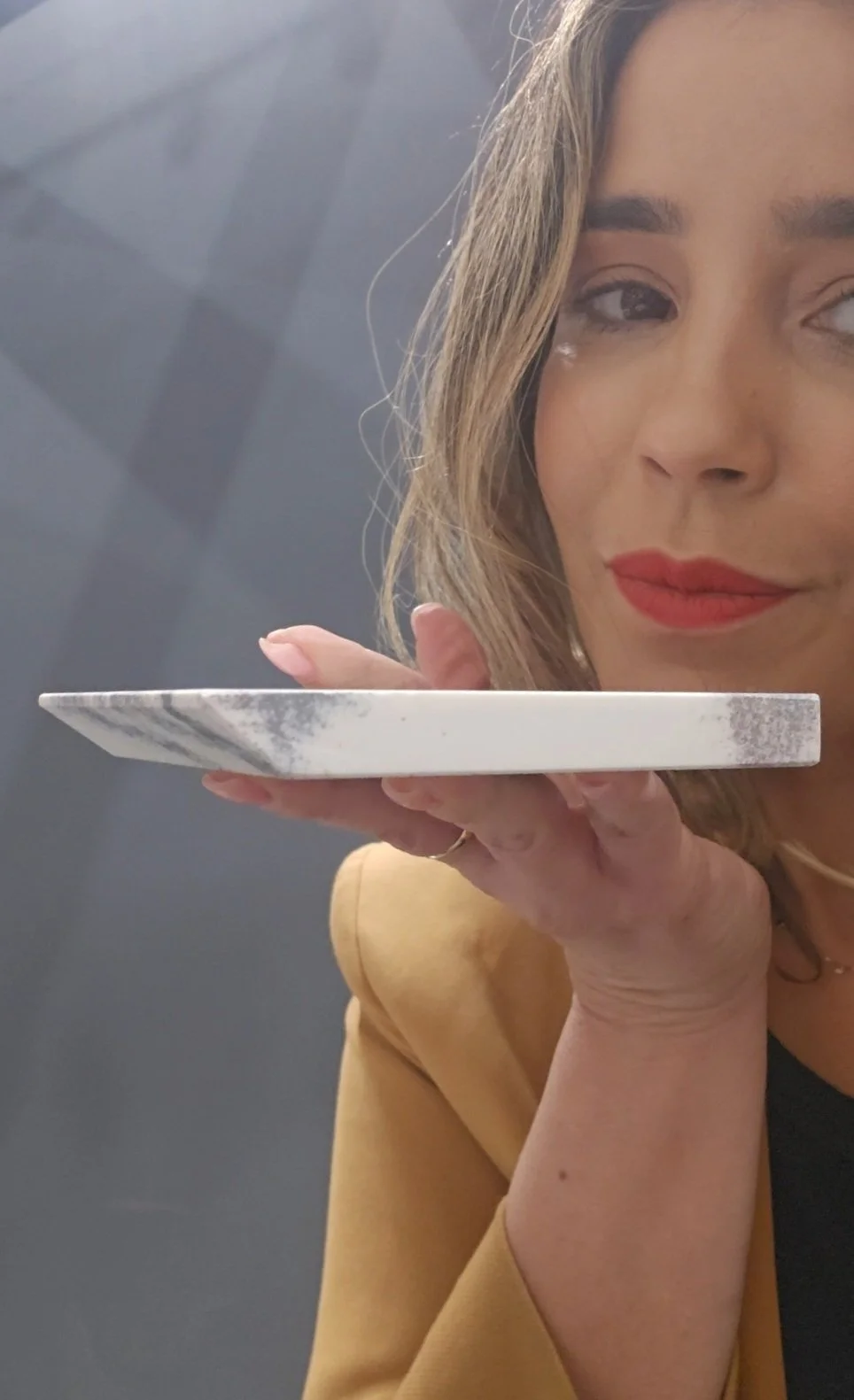
How Fabricators Create the Shark Nose Profile
Achieving a clean shark nose edge requires advanced fabrication machinery.
Because innovative surfaces are manufactured under extreme pressure, cutting a deep, continuous reverse bevel requires specialized waterjet or CNC routing. The fabricator must carefully manage tool speed and vibration to relieve stress in the slab.
This process ensures the remaining upper lip retains its full structural integrity.
It is a detail where precise engineering entirely dictates the design's success.
If you are currently detailing a high-performance space and need professional guidance on edge execution, contact Lais Luz team to coordinate your project specifications.
Frequently Asked Questions
What is a shark nose edge countertop?
A shark nose edge is a premium countertop profile featuring a steep, reverse bevel cut underneath the top surface. This creates a tapered silhouette that hides the true thickness of the slab, producing a distinct shadow line that makes the countertop appear to float weightlessly above the cabinets.
Can you fabricate a shark nose edge on porcelain countertops?
Yes. Large-format porcelain countertops can be precision-machined with a shark nose edge profile using advanced CNC or waterjet cutting tools. Due to porcelain's high density and strength, the slim, tapered edge remains highly durable and resistant to daily impact when executed by a certified specialist.
Does a shark nose countertop edge work with handleless cabinets?
Yes. The shark nose edge is highly functional for handle-free kitchen design. The reverse bevel under-taper creates a natural, continuous recessed space between the countertop and the cabinet doors. This allows fingers to easily grip and open drawers without requiring hardware.
Read More: