Polished vs Satin Finishes: Understanding the Difference
Polished vs Satin
Polished vs Satin Finishes: What's the Difference?
When selecting a porcelain stoneware, sintered stone, or ultracompact surface, one of the most important design decisions is choosing the finish. The two most popular options are polished and satin finishes, and each creates a distinctly different visual and functional experience.
A polished finish features a reflective surface that enhances color, veining, and pattern depth. It creates a bright, luxurious appearance and can make spaces feel larger by reflecting natural and artificial light.
A satin finish offers a softer, lower-reflectivity appearance. Rather than creating a mirror-like effect, it diffuses light, producing a more natural and understated look. Satin finishes are often preferred in contemporary, minimalist, and wellness-focused interiors because they provide visual warmth without excessive glare.
Neither finish is inherently better. The ideal choice depends on the design goals, lighting conditions, maintenance preferences, and overall atmosphere you want to create.
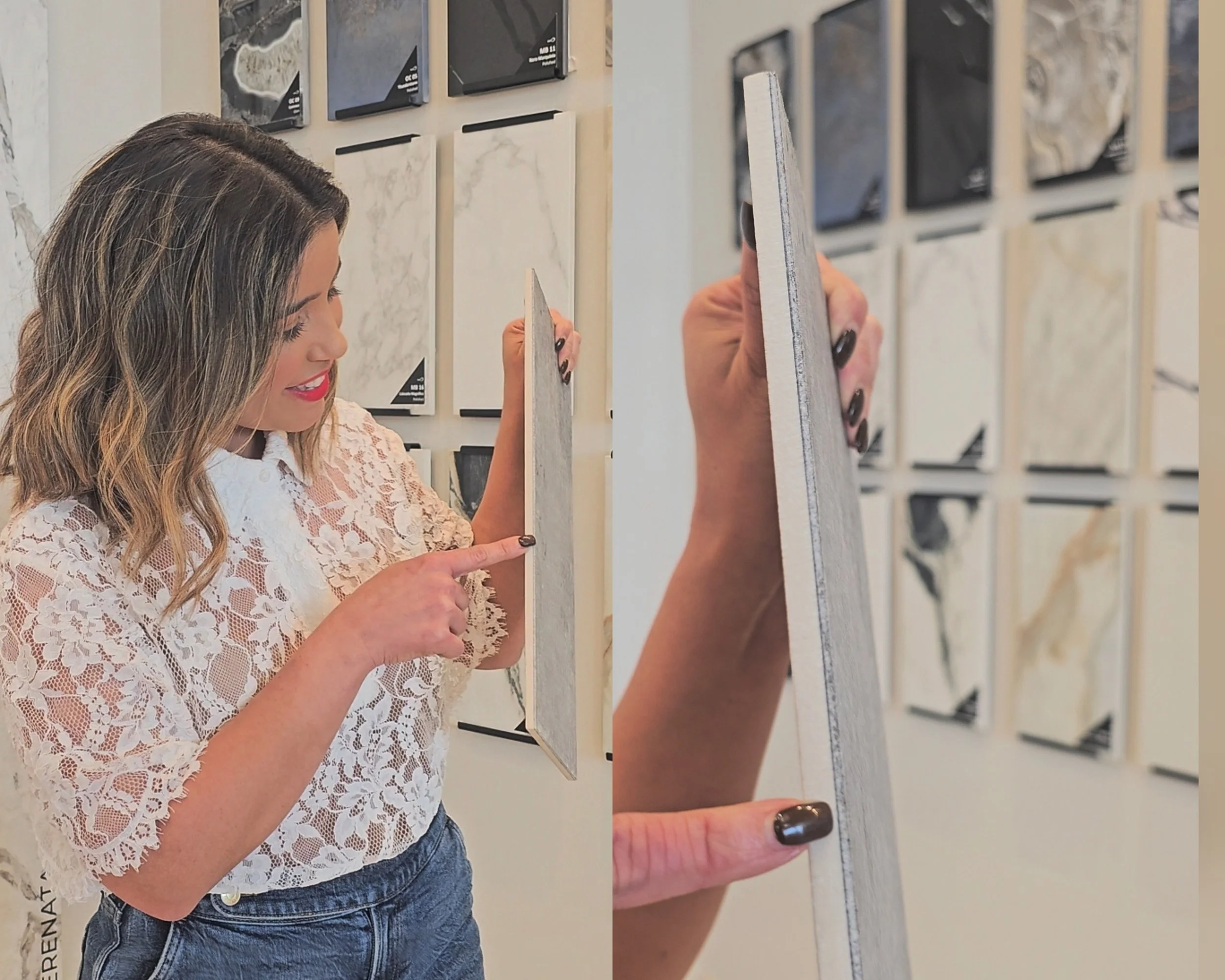
One side is satin, offering a softer texture, while the other side is polished, reflecting light. This illustrates the visual and tactile contrast between finishes.
What Is a Polished Finish?
A polished finish is achieved through a mechanical polishing process that creates a smooth, reflective surface. The result is a finish that emphasizes movement, color variation, and veining patterns.
Benefits of Polished Surfaces
Enhances the depth and richness of colors
Highlights intricate veining and design details
Reflects natural and artificial light
Creates a luxurious, high-end appearance
Helps smaller spaces feel brighter and more expansive
Best Applications for Polished Finishes
Polished surfaces are commonly specified for:
Kitchen countertops
Bathroom vanities
Feature walls
Luxury residential projects
Hospitality and commercial interiors
In spaces with limited natural light, a polished finish can significantly increase brightness and visual openness.
What Is a Satin Finish?
A satin finish offers a refined, silky appearance with reduced reflectivity. Rather than reflecting light directly, it diffuses light across the surface, creating a softer visual effect.
Many architects and designers appreciate satin finishes because they provide a balanced combination of elegance and practicality.
Benefits of Satin Finishes
Soft, natural appearance
Reduced glare and reflections
Comfortable visual experience
Timeless design versatility
Complements both modern and traditional interiors
Best Applications for Satin Finishes
Satin finishes are frequently selected for:
Kitchen countertops
Bathroom surfaces
Wall cladding
Fireplace surrounds
Open-concept living spaces
Wellness and hospitality environments
Their subtle appearance creates an inviting atmosphere while maintaining a sophisticated aesthetic.
Which Finish Is Best?
The best finish depends on your design goals.
Choose a polished finish if you want:
Maximum visual impact
Enhanced veining and color depth
Greater light reflection
A luxurious, elegant appearance
Choose a satin finish if you want:
A softer, more natural aesthetic
Reduced glare
A warm and inviting atmosphere
Timeless design flexibility
Polished and satin are just the beginning.
Explore the complete collection of Mineral Surface finishes, textures, and visual effects to find the perfect look for your next project.
Both polished and satin finishes offer exceptional beauty and performance. The right choice comes down to how you want your space to look, feel, and interact with light.
For homeowners, designers, and architects working with porcelain stoneware, sintered stone, or ultracompact surfaces, understanding the differences between polished and satin finishes is essential to achieving the desired design outcome.
FAQS Polished and Satin Finishes
What is the difference between a satin surface and a polished finish?
Polished finishes have a glossy, reflective appearance that enhances color and veining. Satin finishes have a softer, lower-reflectivity appearance that creates a more natural look.
Is a satin vs polished finish better for countertops?
Neither is universally better. Polished finishes are ideal for homeowners seeking a bright, luxurious appearance, while satin finishes are preferred for a softer and more understated aesthetic.
Do polished finishes make a room look bigger?
Yes. Because polished surfaces reflect light, they can make spaces appear brighter and more spacious.
Are satin finishes more modern?
Satin finishes are popular in contemporary and minimalist interiors, but both satin and polished finishes are widely used in modern design.
Which finish shows veining better?
Polished finishes typically enhance veining, movement, and color depth more dramatically than satin finishes.
Can porcelain stoneware be polished or satin?
Yes. Many porcelain stoneware collections are available in both polished and satin finishes, allowing designers to select the appearance that best suits their project.
Are polished and satin finishes available in mineral surfaces?
Yes. Many mineral surfaces, including porcelain stoneware, sintered stone, and ultracompact surfaces, are manufactured in both polished and satin finishes.
Which finish is best for natural light?
Polished finishes maximize light reflection, while satin finishes soften and diffuse light. The best choice depends on the desired atmosphere of the space.
Need help selecting the right finish for your project?
Connect with Lais Luz for expert guidance on porcelain stoneware, sintered stone, ultracompact surfaces (Dekton). Whether you're a homeowner, designer, architect, or fabricator, we're here to help you make informed decisions.
Read More: