Silica-Free Surfaces: The Future of Healthy Design
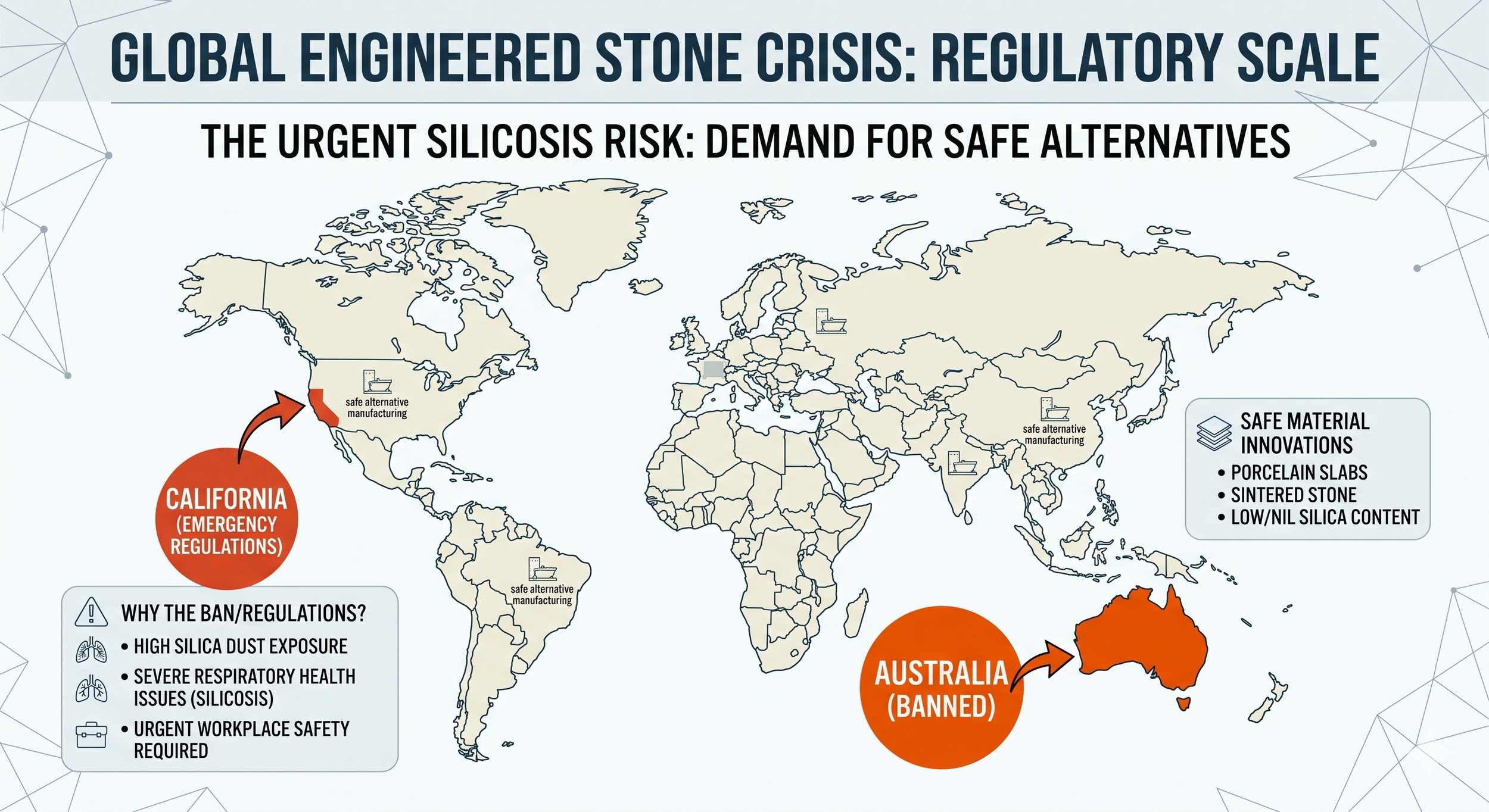
The global movement toward silica-free materials is led by regions like Australia and California, where worker safety has become a legislative priority.
The Global Health Shift: Why Quartz is Under Fire
For decades, engineered quartz was the industry standard for durability. However, its high crystalline silica content—often exceeding 90% has led to a devastating epidemic of silicosis, a fatal and incurable lung disease caused by inhaling pulverized silica dust.
The Australian Ban: In 2024, Australia became the first nation to implement a total ban on engineered stone containing more than 1% crystalline silica to protect its workers.
The California Emergency: California has followed suit, implementing emergency temporary standards and considering a full ban as confirmed silicosis cases continue to rise—surpassing 540 cases and nearly 30 deaths by mid-2026.
“The silicosis crisis is not a failure of rules, it’s a failure of a product. Every jurisdiction that has reduced disease has done so by eliminating crystalline silica stone itself. ”
Silica-Free Dust
Understanding the Science: Low Silica vs. Silica-Free
It is vital to understand that "Low Silica" is not "Silica-Free." Many brands have reduced silica content to under 40% or 10% to mitigate risk, but Silica-Free Mineral Surfaces eliminate the danger entirely.
Porcelain Slabs:
Created from refined clays and natural minerals fired at over 1200°C, these are completely inert and non-porous.
Dekton (Ultracompact Surfaces):
A sophisticated mix of raw materials processed under 25,000 tons of pressure, Dekton is a 100% silica-free and carbon-neutral surface.
Sintered Stone:
Made from 100% natural minerals without resins or petroleum glues, making it the healthiest choice for indoor and outdoor living.
Silica-Free Materials
Applications: Safety Meets High-Performance Luxury
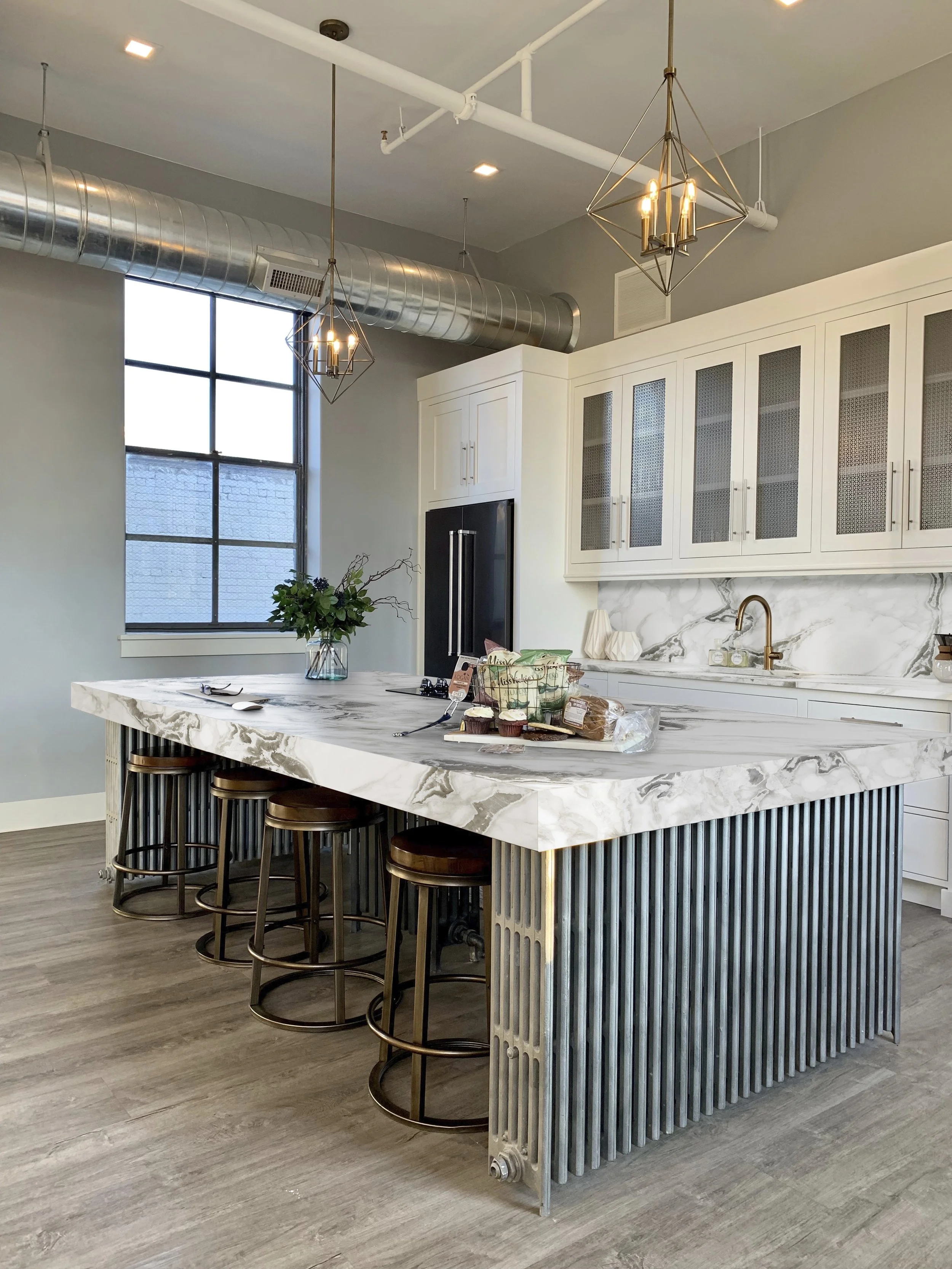
Choosing silica-free surfaces doesn't mean sacrificing beauty. In fact, these materials outperform natural stone and quartz in every category.
Outdoor Kitchens:
Unlike quartz, which yellows under UV exposure, Dekton and Porcelain are 100% UV stable.
Hygienic Bathrooms:
With zero porosity, these surfaces prevent bacterial growth in shower walls and vanities.
Architectural Fireplaces:
These materials are fire-born and heat-proof, ideal for seamless, monolithic media walls.
Smart Tech Integration:
They are the only materials safe for integrated technology like Invisacook (invisible induction), Invisacharge, and invisible touch switches because they contain no heat-sensitive resins.
Because mineral surfaces are resin-free and silica-free, they are the only materials safe for integrated technologies like Invisacook and invisible touch switches.
FAQ’S
What exactly happened in Australia with engineered stone?
In July 2024, Australia implemented a world-first ban on the use, supply, and manufacture of engineered stone. This was a direct response to a "tsunami" of silicosis cases among fabricators. The ban focuses on materials with high crystalline silica content, which led the industry to pivot toward silica-free mineral surfaces like Dekton and porcelain.
Is "Low-Silica" stone safe enough?
While low-silica options (often defined as <40% or <10% silica) reduce the risk compared to traditional quartz, they do not eliminate it. For a "Zero-Risk" environment during fabrication, experts like Lais Luz recommend Silica-Free Mineral Surfaces, which are engineered without crystalline silica entirely.
How is California responding to the silicosis epidemic?
California has implemented emergency temporary standards through Cal/OSHA to protect workers. These include strict "wet cutting" requirements and enhanced respiratory protection, but many advocates are pushing for a total ban similar to Australia's to prevent further fatal diagnoses among young stone workers.
Join the Movement Toward Healthy Living
The move toward silica-free surfaces is more than a design trend. It is a commitment to the lives of the artisans who build our homes. By choosing mineral surfaces, you are choosing a sustainable, high-performance future.
Ready to start your silica-free project?