What Is a Mitered Edge? A Guide for Modern Countertops
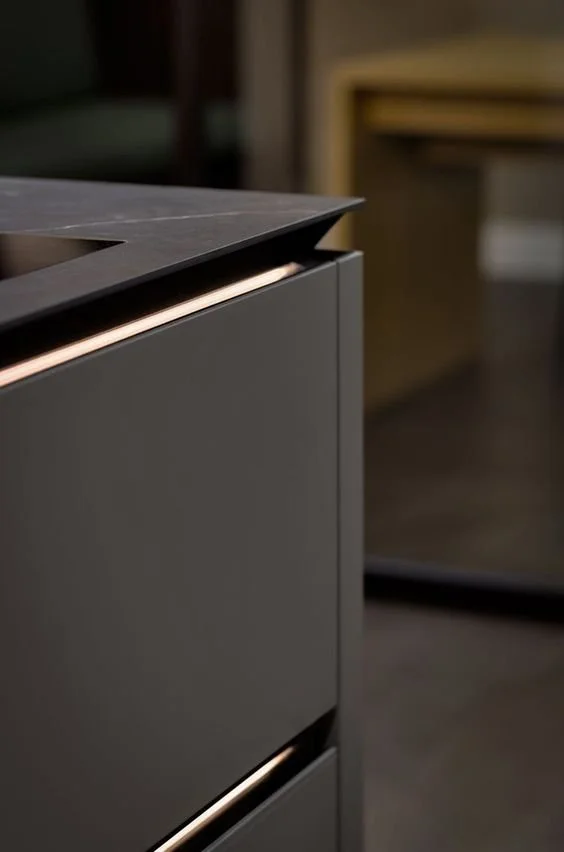
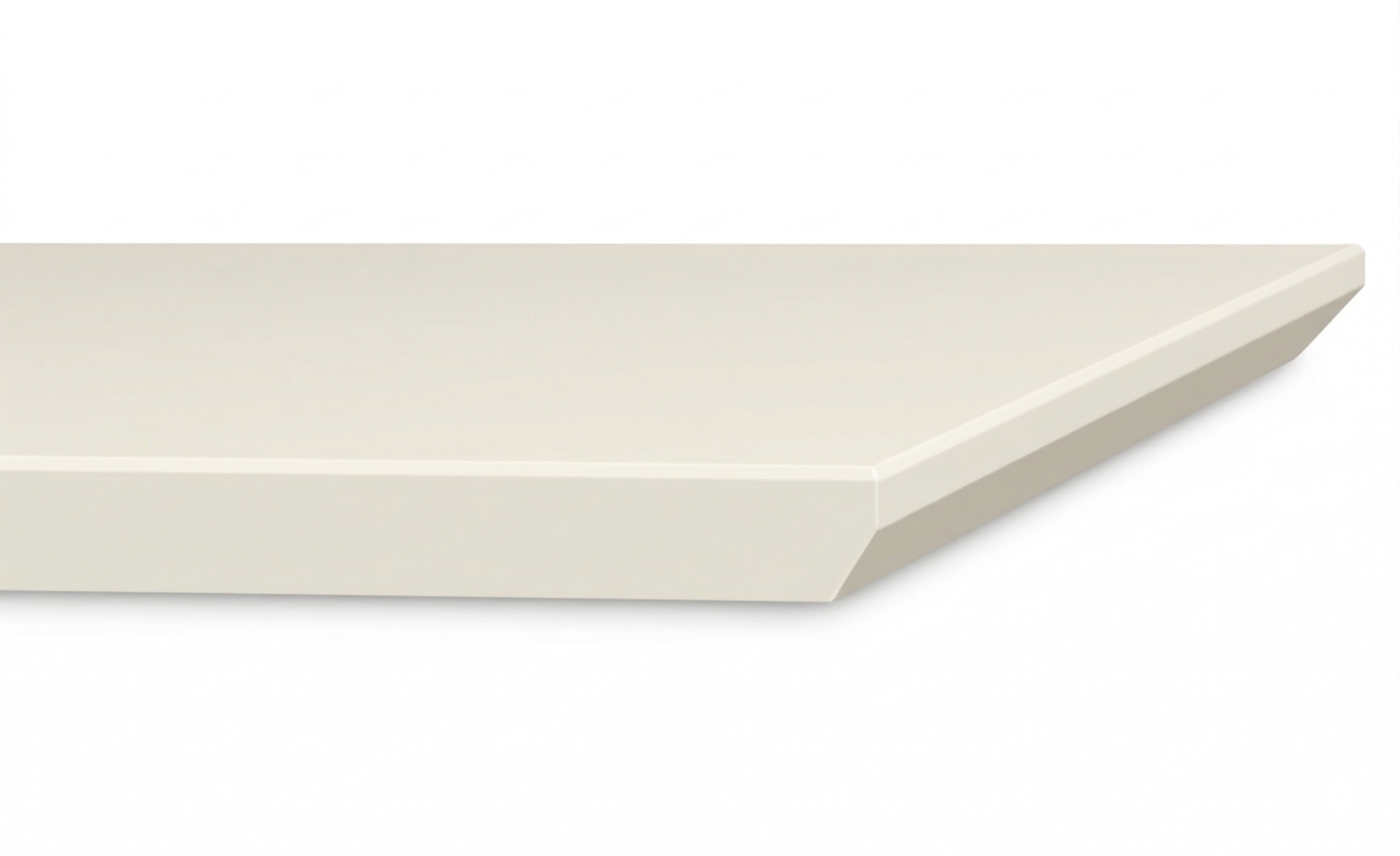
A mitered edge is a fabrication technique that joins two pieces of material at a 45-degree angle to create the appearance of a thicker countertop, fireplace surround, waterfall island, or wall cladding. Popular in porcelain, sintered stone, quartz, and natural stone applications, a mitered edge delivers a seamless, modern appearance while preserving the visual continuity of the material.
What Is a Mitered Edge (and What Else Is It Called)?
In the surface industry, a mitered edge is often referred to by several different names. Depending on the project, fabricator, or designer, you may also hear terms such as:
Built-up edge
Thick-edge profile
Wrapped edge detail
Monolithic edge design
Engineered thick edge
Seamless edge fabrication
While the terminology may vary, the goal remains the same: creating the visual effect of a thicker surface without requiring a thicker slab.
Throughout this article, we'll use several of these terms interchangeably to help you become familiar with the different names used throughout the industry.

This fireplace features a mitered edge porcelain surround and floating mantle, creating a seamless, thick-block look.
Why Designers Love Built-Up Edge Countertops
One of the biggest advantages of this fabrication technique is its ability to create dramatic visual impact.
Rather than exposing the original slab thickness, the material appears to continue downward, creating a substantial profile that feels custom and architectural.
Benefits include:
Clean, contemporary appearance
Seamless visual transitions
Flexible thickness options
Premium architectural aesthetic
Suitable for kitchens, fireplaces, walls, and outdoor spaces
Whether incorporated into a waterfall island or a floating fireplace surround, the effect is both timeless and striking.
Porcelain Mitered Edge Applications
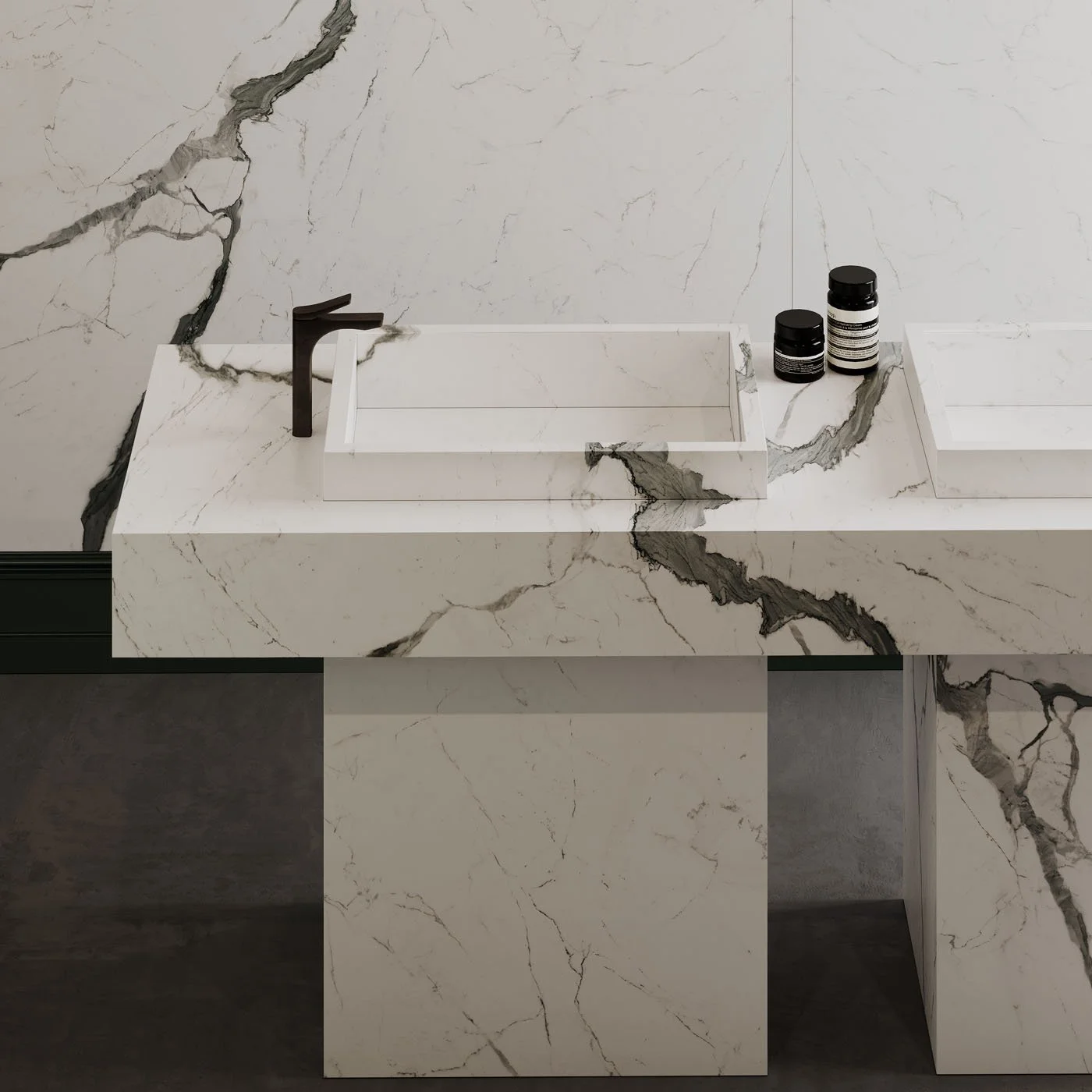
Large-format porcelain slabs have become one of the most requested materials for thick-edge designs.
A porcelain mitered edge allows designers to create a substantial countertop appearance while maintaining the advantages of a slim slab.
Popular applications include:
The continuity of the slab pattern across the corner creates a refined appearance that is difficult to achieve with traditional edge profiles.
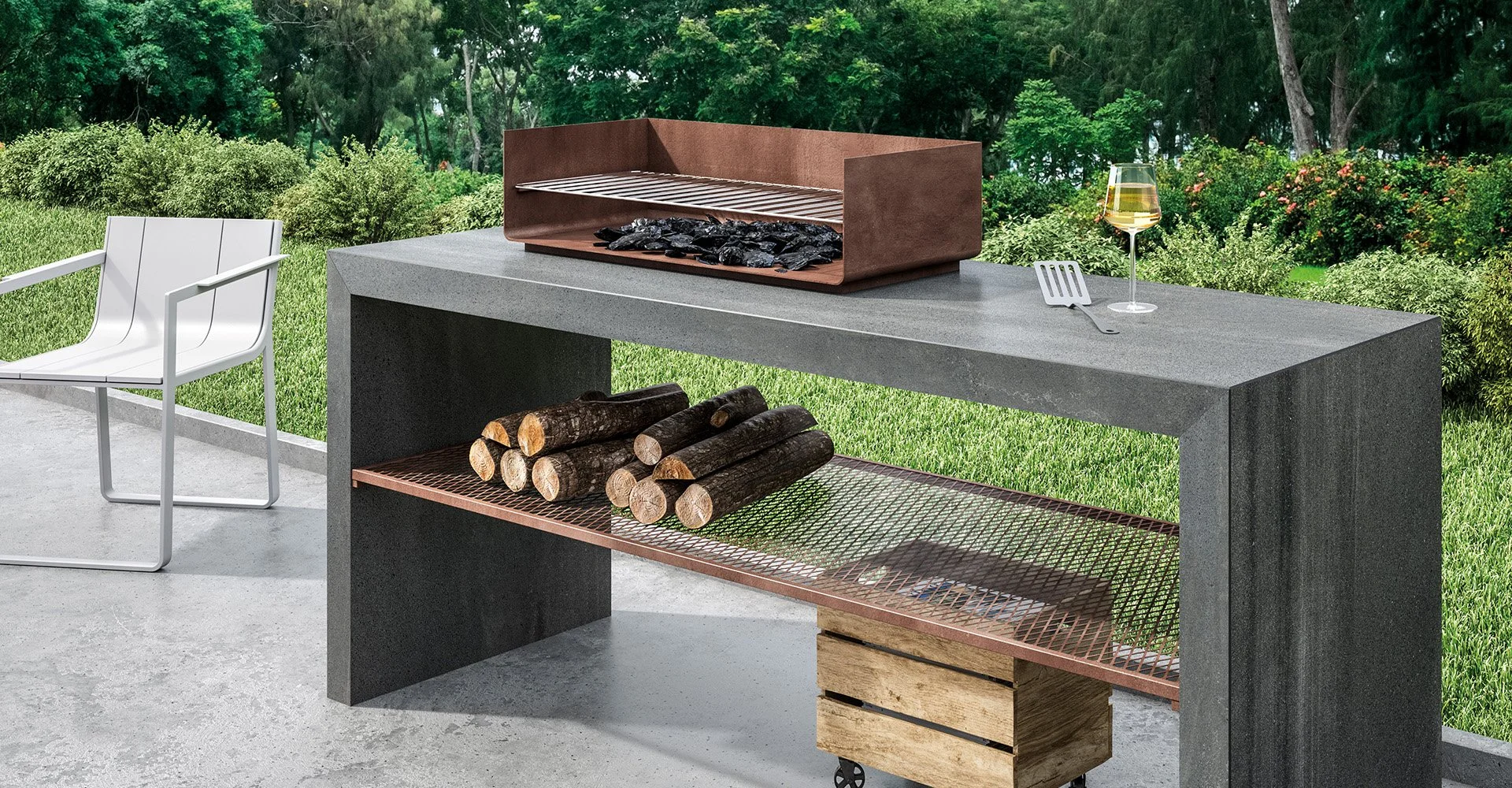
Real Projects Featuring Thick-Edge Designs
One of the best ways to appreciate this fabrication method is to see it installed in real spaces.
Whether paired with a waterfall island, outdoor kitchen, floating fireplace, or full-height wall cladding, the built-up profile creates a sense of craftsmanship and sophistication.
These projects showcase:
Seamless architectural lines
Greater visual depth
Continuous slab movement
Monolithic design aesthetics
Modern luxury styling
Important Considerations Before Choosing This Edge Style
Before selecting a built-up edge profile, there are several factors worth considering.
Material Selection
Most premium surface materials can be fabricated using this technique. Success depends less on the material itself and more on the expertise of the fabrication team.
Fabrication Quality
Precision cutting, polishing, and assembly are essential. The quality of the seam often determines the final appearance.
Investment
Because additional fabrication steps are required, thick-edge designs generally involve more labor than standard edge profiles. Many homeowners find the visual impact well worth the investment.
Installer Experience
Choosing an experienced fabrication and installation team is critical for achieving clean lines and long-term performance.
Mitered Edge Details
Mitered Edge vs. Other Countertop Edge Profiles
Every edge profile creates a different design statement.
Eased Edge: This profile has a soft, slightly rounded edge, making it versatile and budget-friendly.
Shark Nose Edge: A tapered edge profile that creates a thinner, floating appearance.
Beveled Edge: With a slanted edge cut, this profile gives a bit of character and works well in transitional kitchens.
Each edge profile has its own aesthetic and functional advantages, so consider your design goals and lifestyle when making your choice.
Frequently Asked Questions
What is mitered edge?
A mitered edge is a fabrication technique that joins two pieces of material at an angle to create the appearance of a thicker surface.
Can porcelain have a mitered edge?
Yes. Porcelain mitered edge fabrication is commonly used for countertops, waterfall islands, fireplaces, and wall cladding.
Is a built-up edge stronger than a standard edge?
Strength depends on proper fabrication and installation. When professionally executed, both options can perform exceptionally well.
Why do designers use thick-edge profiles?
They create visual depth, a custom appearance, and a more substantial architectural presence.
Is a mitered edge worth it?
For homeowners seeking a contemporary, luxury appearance, many consider the additional fabrication investment worthwhile.
Let's Design Something Extraordinary
Whether you're planning a waterfall island, porcelain countertop, fireplace surround, outdoor kitchen, or feature wall, the right edge profile can completely transform the final design.
At Lais Luz, we help homeowners, designers, architects, and builders explore what's possible with porcelain slabs, sintered stone, and other mineral surfaces.
Read More: